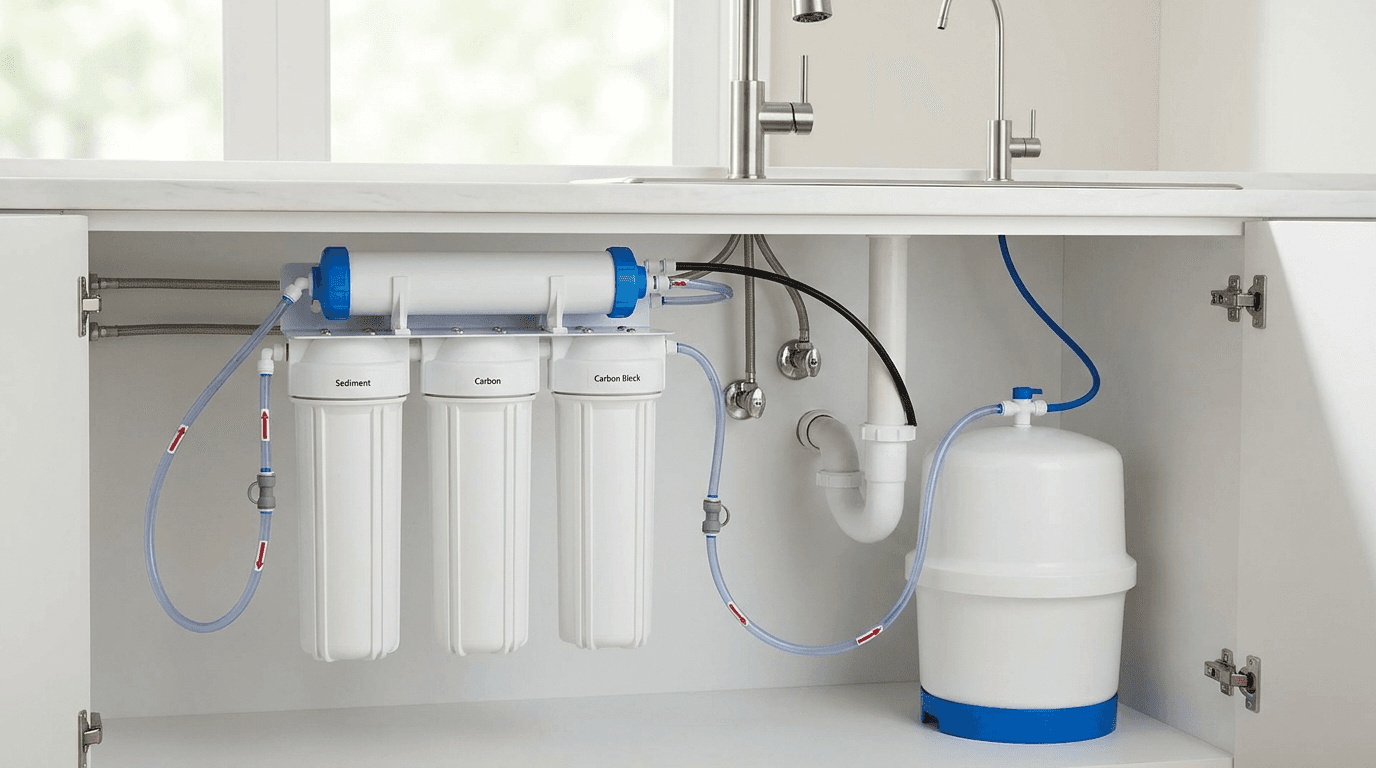
Most filters catch some things. RO catches nearly everything.
| Contaminant | Standard Filter | Reverse Osmosis |
|---|---|---|
| Chlorine & Chloramines | ✓ | ✓ |
| Lead | Partial | ✓ |
| Fluoride | — | ✓ |
| Nitrates | — | ✓ |
| Arsenic | — | ✓ |
| Dissolved Solids (TDS) | — | Up to 99% |
| Pharmaceuticals | Partial | ✓ |
| Heavy Metals | Partial | ✓ |
| Sediment | ✓ | ✓ |
Your water is better in every measurable way.
Better Taste, No Question
The most common reaction after RO installation: "I actually want to drink water now." Removing dissolved solids, chlorine, and minerals transforms flat or off-tasting water into something clean and neutral.
Replaces Bottled Water
The average household spends $500–$1,000 per year on bottled water. An RO system eliminates that cost and produces better water with less plastic waste.
Safer Drinking Water
RO removes contaminants that pass standard treatment, including lead from aging pipes and trace pharmaceuticals that municipal treatment doesn't address.
Better Coffee, Ice & Cooking
Everything made with water tastes better when the water itself is clean. Coffee, soups, pasta, ice cubes — the difference is noticeable.
Peace of Mind
Stop wondering what's in your water. With an RO system under your sink, the answer is: almost nothing but water.
Under-sink RO. Whole-house RO. We match the system to the application.
Under-Sink RO (Most Common)
The standard residential solution. Installed under your kitchen sink with a dedicated faucet. Stores 3–5 gallons of filtered water in a pressurized tank. Ideal for drinking water, cooking, and coffee.
Under-Sink RO + Remineralization
Same system with an additional remineralization stage that adds beneficial minerals (calcium, magnesium) back after filtration. Preferred by homeowners who want pure water with a naturally balanced taste.
Tankless RO
Higher flow rate, smaller footprint. No storage tank — produces filtered water on demand. Best for households with higher daily drinking water consumption.
Whole-House RO
Treats all water entering the home at the municipal or well connection. Used in commercial applications or homes with severely contaminated source water. Contact us for a site assessment.
Reverse Osmosis Questions
How much water does an RO system waste?
Traditional RO systems produce some drain water — typically 3–4 gallons of waste per gallon of filtered water. Modern high-efficiency systems reduce this ratio significantly.
Will RO remove the minerals my body needs?
RO removes both harmful and beneficial minerals. If mineral content is a concern, we can install a remineralization filter as the final stage, which adds calcium and magnesium back in balanced amounts.
How is RO different from a regular filter?
Standard carbon filters improve taste and remove chlorine effectively. They don't remove dissolved solids, nitrates, fluoride, lead, or most heavy metals. RO removes virtually everything.
Can I connect my refrigerator to an RO system?
Yes. We can run a dedicated line from the RO tank to your refrigerator's ice maker and water dispenser. This is one of the most popular add-ons.
What does the water taste like?
Clean and neutral. With a remineralization stage, it picks up a naturally fresh, slightly mineral taste similar to high-quality bottled spring water.
How long does the membrane last?
With good pre-filtration and normal municipal water, an RO membrane typically lasts 2–3 years. We test output TDS during service visits to know exactly when it's time.
Ready for
We come to your home, test your water on-site, and give you a flat-rate quote. No pressure. No obligation. We respond within 24 hours — usually same-day.